
Date/Time
Friday, October 2 to Sunday, October 4
All Day
Location
Airfield 4-H Center
Categories
Please join us for the 2026 VNPS Annual Meeting, October 2-4, 2026 at the Airfield 4-H Center, Wakefield, Virginia. Please watch this Event page for schedule updates. See you there!
Schedule
| Friday, October 2 | |
| 4:00 PM | Room check-in begins |
| 4:00-6:00 PM | Meeting registration and social† |
| Book sales, exhibits, light refreshments† | |
| 6:00-7:15 PM | Buffet dinner† – Dining Hall |
| 7:15 PM | Keynote Presentation by William “Bill” Cullina |
| Saturday, October 3 | |
| 7:15-8:30 AM | Breakfast – Dining Hall |
| 8:30 AM | Field trip registration begins |
| 9:00-10:00 AM | Pick up box lunches, form carpools, and depart for field trips |
| Afternoon | Return from field trips, explore grounds, rest |
| 5:00-6:00 PM | Social with light refreshments† |
| 6:00-7:00 PM | Buffet dinner† – Dining Hall |
| 7:00-7:30 PM | Annual business meeting – Nancy Vehrs, President |
| 7:30 PM | Presentation by Harmony Dalgleish |
| Sunday, October 4 | |
| 7:15-8:45 AM | Breakfast – Dining Hall |
| by 10:00 AM | Check out of room |
| 9:00-10:00 AM | Pick up snacks and depart for field trips |
| Field trips, then safe home! |
†No cash bar; alcohol is BYOB.
Business Meeting and Elections
Please attend the Annual VNPS Business Meeting on Saturday at 7:00 PM. We will also conduct an election of board members.
TK: 2026 Slate of Nominees for Election to the VNPS Board of Directors.
Speakers
William Cullina
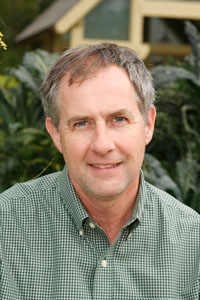
William Cullina is a distinguished figure in the field of horticulture and public gardens. He has served as the F. Otto Haas Executive Director of the University of Pennsylvania’s Morris Arboretum & Gardens since July 2019.
Previously Bill served for 8 years as President and CEO of the Coastal Maine Botanical Garden. He completed a new net-zero energy LEED platinum Education Center and grew annual attendance by 250% to 206,000 visitors in 2018.
Before that, Mr. Cullina was the Nursery Director and Head Propagator at the New England Wildflower Society in Massachusetts. (It’s now known as the Native Plant Trust.)
He is a recognized authority on North American native plants and lectures on a variety of subjects to garden and professional groups and writes for popular and technical journals. His books include Wildflowers; Native Trees, Shrubs, and Vines; Understanding Orchids; Native Ferns, Mosses, and Grasses; Understanding Perennials; and he co-authored Coastal Maine Botanical Gardens: A People’s Garden in 2011. Unfortunately, they are all out of print.
Mr. Cullina’s awards include:
- Scott Medal for lifetime achievement in horticulture;
- 2012 Perennial Plant Association’s highest honor, the Award of Merit;
- 2013 George Robert White Medal for “advancing horticulture in the broadest sense”;
- Award of Excellence for advancing the goals of the National Garden Clubs of America; and
In 2018 The Garden Club of America invited Mr. Cullina to become an honorary member.
Harmony Dalgleish
Virginia Milkweed Hybridization & the Fungi and Bacteria Effects in their Bodies
The microbiome (the bacteria and fungi that live in and on the bodies of animals and plants) can greatly affect animal and plant health, with oral and gut microbiomes being active areas of study. Recent research in animal models is beginning to illustrate the ways that the microbial communities in reproductive systems (the reproductive microbiome) can have significant effects on fertility. However, these effects are rarely considered from an ecological or evolutionary perspective. In plants, the soil and leaf microbiomes are major components of plant health, but relatively little is known about the microbial communities of plant reproductive systems. Milkweeds are an excellent model system to understand the impact of the reproductive microbiome in plants because of their unique pollination system. Like many crop plants, milkweeds have a wet pollination system which requires moisture in order for pollen tubes to germinate and grow to transport the sperm to the ovule and enable fertilization. In milkweed, thousands of pollen grains are packaged into structures called pollinia. The moisture required for germination in milkweeds is the nectar located in the stigmatic slit. In this talk, I will present the results of a series of field and laboratory experiments to understand the influence of the reproductive microbiome in milkweed on pollen tube germination, the first critical step for seed production. Through studies of field-collected nectar, pollinator exclusion, and experiments with 63 individual microbial isolates, we show that the reproductive microbiome in milkweed can inhibit sexual reproduction. It may also play a role in structuring an active hybrid zone between Ascelipas syriaca and A. exaltata in eastern Virginia.
Dr. Harmony Dalgleish is a Professor in the Biology Department at William & Mary. As a plant ecologist, she studies how plant-animal-microbe interactions affect plant population dynamics and demography. She earned her PhD at Kansas State University where she worked at the Konza Prairie Long-Term Ecological Research station.
Recently, her research has expanded to include fire ecology of longleaf pine and other Virginia ecosystems and the ecology of taro agriculture in the South Pacific. Dr. Dalgleish has published 40 papers in top botanical and ecological journals such as New Phytologist, American Journal of Botany, and Ecology Letters. In 2019, she was a Fulbright Fellow at the Institute of Botany in Třeboň, Czech Republic. Dr. Dalgleish has been a grateful recipient of two grants from VNPS, which supported 2 MS and 3 undergraduate researchers and provided the seed funds for the work on milkweed nectar microbiomes presented today.
Field Trips
- Field trip signups for everyone will be Saturday morning for both Saturday and Sunday trips.
- Saturday field trips will leave as a group at 10:00 AM sharp from the airfield 4-H Center, carpooling where possible. After the field trip, we will return to the Center.
- Sunday field trips will also leave as a group from the Airfield 4-H Center at 9:30 AM following breakfast and lodging checkout. After the field trip, everyone will head directly for home.
- As with most botanical explorations, the hikes herein will proceed at a “flower an hour”.
PLEASE NOTE: Dress for a wetland walk and appropriately for ticks and chiggers. Gaiters branded Lymeez are encouraged to be worn.
For questions or comments, contact Kevin Howe at grantsmanager@vnps.org.
Saturday Field Trips
Piney Grove Preserve & Piney Grove Flatwoods Natural Area Preserve ⌚️ about 20 minutes away
Led by Johnny Townsend, Senior Botanist, Virginia Division of Natural Heritage
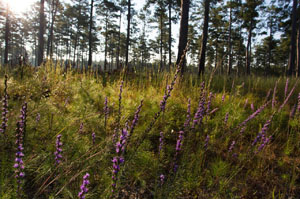
Photo: Bobby Clontz
Piney Grove is a 3,200 acre Preserve held by The Nature Conservancy and within the Preserve is Piney Grove Flatwoods NAP. This land is a pine savanna, part of the Virginia Pinelands of southeast Virginia which at one time consisted of vast expanses of forest types and extensive wetlands. The Longleaf Pine savannas herein are now being restored and protected. This pineland habitat is home to the protected Red-cockaded Woodpecker. This is a unique floristic fire-adapted habitat well worth visiting for fall blooming plants from blazing star to sundew to gentian and more.
Cherry Orchard Bog Natural Area Preserve ⌚️ about 30 minutes away
Led Gary Fleming, retired Vegetation Ecologist from Virginia Division of Natural Heritage
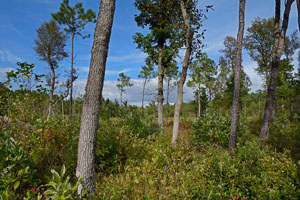
Photo: Gary Fleming
Cherry Orchard Bog is a 354-acre seepage wetlands bog community. Coastal Plain seepage wetlands contain a variety of plant communities with very restricted distribution and abundance. This is a fire-adapted rare community that is now maintained with prescribed burns by Virginia DCR. Unusual plants, which may be in bloom on the walk, include Death-camas, Bog-buttons, White Fringed Orchid, Cuthbert’s Turtlehead, Purple Pitcher Plants, and Red Milkweed.
Chub Sandhill Natural Area Preserve ⌚️ about 20 minutes away
Led by Chris Ludwig, retired Botanist from Virginia Division of Natural Heritage
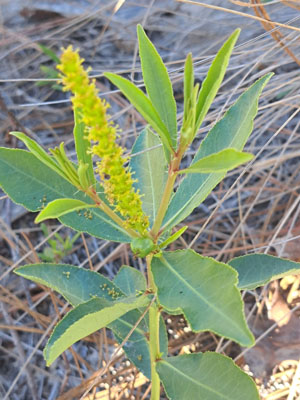 Chub Sandhill Natural Area Preserve is 1,066 acres of sandy upland flats, low sandhills, and riparian wetlands (bottomland) along the Nottaway River. These bottomlands are dominated by Swamp Tupelo, Swamp Chestnut Oak, Red Maple, and Baldcypress. This preserve, like others in the region, is managed with prescribed burns and planting of Longleaf Pines. Rare plants to be seen include Queen’s Delight, Golden Puccoon, Hoary Scurf-pea, and Sand Post Oak.
Airfield 4-H Center ⌚️ on site
Led by John Bunch, retired biologist, Virginia Master Naturalist and nearby resident
The 4-H Center upon which we are holding our meeting comprises 218 acres and includes a 105-acre lake with over a mile of shoreline. Trails are level and John, the leader, knows this area well; we may be able to find gentians, ladies’ tresses orchids, Bartonias (Screwstem), Purple Pitcher Plant, and more. The Center even has a section of an old corduroy road dating to 1862; that type of road consisted of logs laid perpendicular to the road’s direction, often over swampy areas.
Antioch Pines Natural Area Preserve ⌚️ about 30 miles away
Led by Nate Miller, Landscape Architect – Native Plant Leader
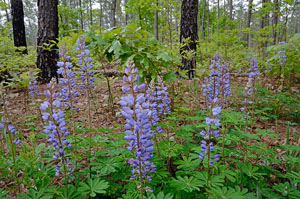
Photo: Gary Fleming
Antioch Pines is 1,157 acres of old growth Loblolly Pine and oak woodlands. Some pines are over 100 feet tall and three feet in diameter. This preserve is located on the east side of the Blackwater River which truly is a blackwater river. Plukenet’s Flatsedge, Sandy-woods Chaffhead, and Viperina occur in Antioch and are found in very few other locations in Virginia, not to mention the trilliums, bellworts, orchids, lilies, and other floral delights that we may encounter at Antioch.
Blackwater Ecological Preserve ⌚️ about 30 minutes away
Led by David Phillips, Preserve Manager
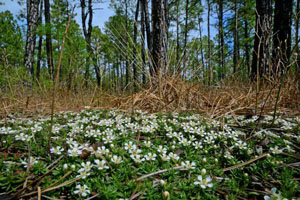
Photo (c) Gary P. Fleming
Blackwater Ecological Preserve is a 319 acres of sand ridges and flats containing some of the rarest plant communities in Virginia. This Virginia Natural Area Preserve is owned and managed by Old Dominion University. This area is considered to be the most northern remnant of Longleaf Pine community that once was 93 million acres spread across the southeast. Among the mixed stands of Longleaf, Pond, and Loblolly Pines are an understory of Turkey Oak (Quercus laevis). The shrub layer contains Sheep Laurel/Carolina Laurel, huckleberries, blueberries, Inkberry, and Switch Cane. As a result of reintroduction of fire, herbs have become abundant including Southern Bracken Fern, Common Pyxie-moss, chaffheads and Fasciculate Beaksedge.
Sunday Field Trips
Piney Grove Preserve & Piney Grove Flatwoods Natural Area Preserve ⌚️ about 20 minutes away
Led by Johnny Townsend, Senior Botanist, Virginia Division of Natural Heritage
A repeat of the Saturday trip.
Cherry Orchard Bog Natural Area Preserve ⌚️ about 30 minutes away
Led Gary Fleming, retired Vegetation Ecologist from Virginia Division of Natural Heritage
A repeat of the Saturday trip.
Airfield 4-H Center ⌚️ on site
Led by John Bunch, retired biologist, Virginia Master Naturalist and nearby resident
A repeat of the Saturday trip.
Antioch Pines Natural Area Preserve ⌚️ about 30 miles away
Led by Nate Miller, Landscape Architect – Native Plant Leader
A repeat of the Saturday trip.
Blackwater Ecological Preserve ⌚️ about 30 minutes away
Led by Nick Flanders, Botanist, Old Dominion Univeristy
A repeat of the Saturday trip with a different trip leader.
For questions or comments, contact Kevin Howe at grantsmanager@vnps.org.
Accommodations
A block of rooms has been reserved at the Airfield 4-H Center.
Reserve your room as part of the registration process.
Special Notes
Meals and snacks are included as part of your registration, as appropriate, for
- Full weekend
- Friday night only
- Saturday only
No cash bar; alcohol is BYOB.
If you have special dietary restrictions, there is space on the registration form for you to provide that information. Please register as soon as possible so that the Airfield 4-H Center can accommodate your needs.
Cancellations and Refunds
Questions or need to change or cancel your registration? Please contact Karen York at the VNPS Office at info@vnps.org or call (540) 837-1600.