
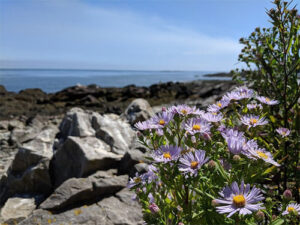
New York Aster, Symphyotrichum novi-belgii
By Betsy Washington, Northern Neck Native Plant Society In Fall, many of our native ssters literally light up the landscape with their daisy-like flowers that are vivid lavender violet, blue violet, pale blue or even white. These late season bloomers are critical food sources for migrating Monarchs and other late butterflies, as well as pollinators…
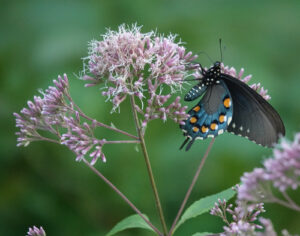
Sweet-scented Joe-pye-weed, Eutrochium purpureum
By Betsy Washington, Northern Neck Native Plant Society In late summer the vanilla-scented flowers of Sweet-scented Joe-pye-weed fill the garden and landscape with billowy clouds of long-lasting blooms covered with bees and butterflies. This gorgeous tall perennial can reach 4 – 7’ high topped with large dome-shaped pink to purple inflorescences up to 12 –…
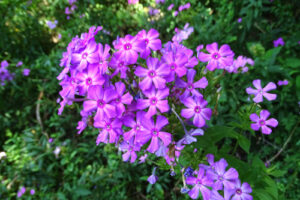
Fall or Garden Phlox, Phlox paniculata
By Betsy Washington, Northern Neck Native Plant Society I am always dazzled by the vibrant, long-lasting blooms of Fall or Garden Phlox as they emerge in July attracting dozens of butterflies, skippers, clearwing moths, hummingbirds and other pollinators to their showy blooms. The large, fragrant pink to red-purple, lavender or rarely white flower clusters (actually…
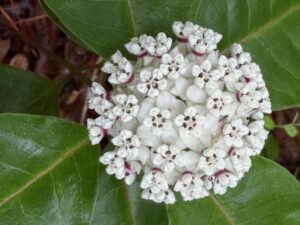
Redring Milkweed, Asclepias variegata
By Betsy Washington, Northern Neck Native Plant Society Milkweeds are wildly popular in many gardens but most of us grow only two or three species, including Butterflyweed and Swamp Milkweed and possibly Common Milkweed. There are thirteen species of milkweed in Virginia and one of my favorites blooms in late May and June, Redring or…
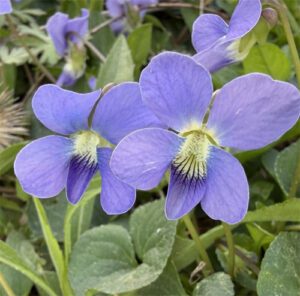
Common Blue Violet, Viola sororia/communis
By Betsy Washington, Northern Neck Native Plant Society The cheerful flowers of our native Common Blue Violet are one of the most anticipated signs of spring, bringing joy to both gardeners and pollinators alike. Blooming from March to June, with occasional rebloom in fall, our Common Blue Violet reaches only 3 – 8” tall with…
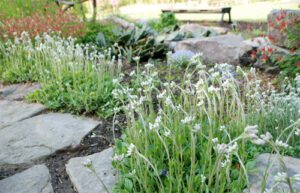
Plantain-leaved Pussytoes, Antennaria plantaginifolia
By Betsy Washington, Northern Neck Native Plant Society Plantain-leaved Pussytoes is one of our most charming perennial groundcovers and begins blooming this month with fuzzy white, tufted flower heads that resemble the toes or paws of kittens. Other names for this appealing groundcover are Pussytoes, Everlasting, Mouse Ears, Ladies’ Tobacco, and even Dog Toes. Who…
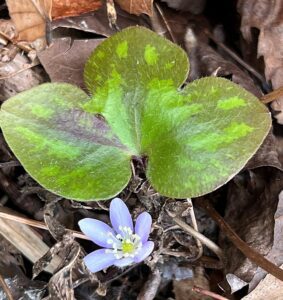
Hepatica Heralds Spring
By Betsy Washington, Northern Neck Native Plant Society Chapter One of the earliest signs of spring is the bloom of the Round-lobed Hepatica or Liverleaf, Hepatica americana. The lovely small flowers of this woodland wildflower look fragile but this hardy perennial blooms in the face of winter often as early as February. An array of…
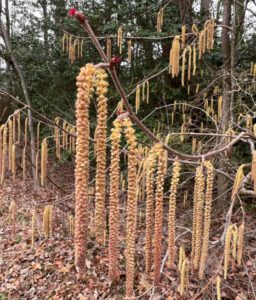
American Hazelnut, Corylus americana
By Betsy Washington, Northern Neck Native Plant Society Our February Plant of the Month, American Hazelnut or Filbert, Corylus americana, is one of our earliest blooming native shrubs, a true harbinger of spring often flaunting its flowers as early as February. As a member of the Birch (Betulaceae) family, American Hazelnut is monoecious, meaning it…
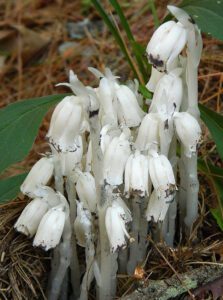
Wildflower of the Year 2026: Ghost Pipes (Monotropa uniflora)
VNPS offers Ghost Pipes artwork on T-Shirts and other apparel. Visit our Online Store to order. Ghost Pipes are herbaceous perennial plants that lack chlorophyll; they obtain their nutrients via mycotrophy, i.e., by parasitizing the fungi present in their roots. The plants are commonly white at flowering but, in rare instances, may be pink or…
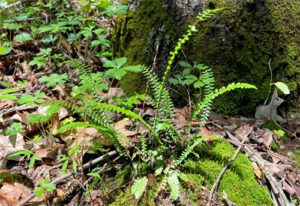
Ebony Spleenwort, Asplenium platyneuron
By Betsy Washington, Northern Neck Native Plant Society Ebony Spleenwort is a charming small, evergreen fern that grows in dense tufts with dark green narrow fronds with a distinctive, wiry dark reddish brown shiny main stem (stipe). In fact, it gets its common name, Ebony, from this very distinctive dark shiny stipe. The narrow fronds…