News & Updates
- A Perpetual Journal Practice Workshop with Lara Call Gastinger
Tuesday, October 20 at 10AM
Ivy Creek Natural Area
Spots are limited, email rcarter112@aol.com to register. - Night Shift: Plants that Support Nocturnal Wildlife
Natalie Izlar from Virginia Working Landscapes shares native night-blooming plants, species whose foliage and flowers glow in the moonlight, and the diverse habitats that sustain nocturnal wildlife. - Wildflower Walks at Ivy Creek
The third Saturday of every month, meet at the parking lot kiosk at 9AM. Check Upcoming Events for more information. - Fire Ecology in the Southeastern US
Marie Norwood, a PhD Student in Dr. Carla Staver's lab in the Princeton Department of Ecology and Evolutionary Biology, shared ways that fire shapes, and is shaped by, vegetation, climate, and land management. - Methods for Ecological Restoration at Home
Piedmont Discovery Center team shares hands-on ecological restoration methodologies. - Corpse Botany
Virginia Working Landscapes’ Botany Technician, Natalie Izlar, helps us identify dormant plants. - The Basics of Nature Journaling(opens in new tab)
Carolyn Duckworth shares the basics of nature journaling for both personal enjoyment and programming and education opportunities. - Calculating the Impact of Leaving Leaves(opens in new tab)
Interesting article on the current science regarding leaving fallen leaves on your lawn and garden. -
Check out this great new resource from Virginia Working Landscapes.
- Find more chapter meeting videos at our showcase(opens in new tab).
- Update your calendar for upcoming local meetings, presentations, lectures, and other events described in the Jefferson Chapter Events Calendar(opens in new tab).
- And keep up with Jefferson chapter activities and discussion on our Facebook Page(opens in new tab)!
Join
Become a Member:
Support Our Mission.
Donate
Support VNPS with
your donation today.
Upcoming Events
Find Field Trips, Meetings, Programs and Plant Sales.
Find a Chapter
Get involved in your
local VNPS chapter.
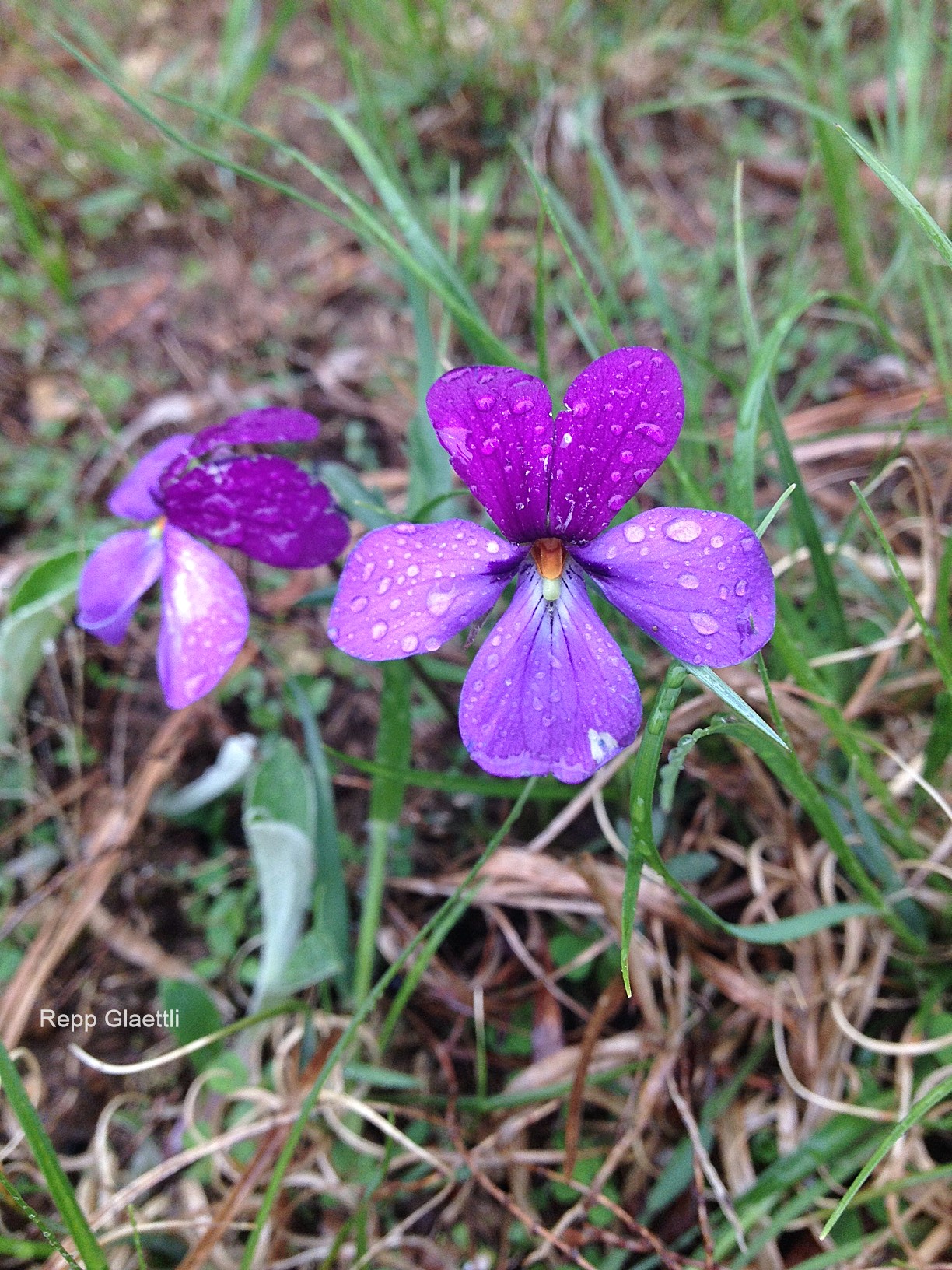
Viola pedata (Birdfoot Violet)
Viola pedata is commonly called Birdfoot violet because the daintily divided leaves are deeply cleft into three to five parts that resemble a bird’s foot. Standing from 3-6 inches tall, this violet has few if any pubescence (hairs). Viola pedata blooms from mid to late spring as well as occasionally in the…
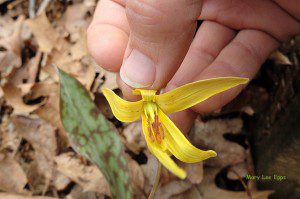
What We Saw on the VMI Bluffs Field Trip (04/19/14)
On April 19, 2014 Jefferson Chapter had a wonderful trip to the VMI bluff and Maury River floodplain. Ruth Douglas led 18 of us to see the many unusual plants there. The area has a wonderful combination of limestone soil; a cool and moist north facing slope, too steep…
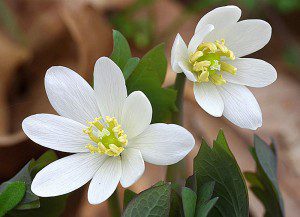
Plants being offered at our 2014 Plant Sale
Jefferson Chapter, Virginia Native Plant Society’s ANNUAL NATIVE PLANT SALE NATIVE PLANT SELECTION (Partial Listing) April 27 (Sun.), 2014, 1:00 – 3:00 PM IvyCreek Natural Area, Barn 1780 Earlysville Rd., Charlottesville Plants listed have been potted by the Jefferson Chapter members from propagated plants (not collected from wild areas). Many…
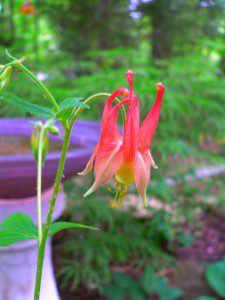
Plant Sale Profile: Aquilegia Canadensis
Native throughout the piedmont and most counties in Virginia, Aquilegia Canadensis (Wild Columbine, Eastern Red Columbine) can be found in dry forests, woodlands, barrens, and rock outcrops; shell-marl slopes, bluffs, and shell middens in the Coastal Plain. Although most numerous on subcalcareous, calcareous, and mafic substrates, in the higher mountains…