News & Updates
- Wildflower Walks at Ivy Creek
The third Saturday of every month, meet at the parking lot kiosk at 9AM. Check Upcoming Events for more information. - Fire Ecology in the Southeastern US
Marie Norwood, a PhD Student in Dr. Carla Staver's lab in the Princeton Department of Ecology and Evolutionary Biology, shared ways that fire shapes, and is shaped by, vegetation, climate, and land management. - Methods for Ecological Restoration at Home
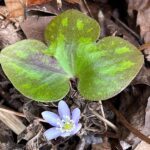
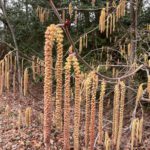
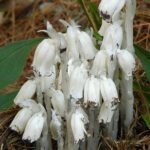
Piedmont Discovery Center team shares hands-on ecological restoration methodologies. - Corpse Botany
Virginia Working Landscapes’ Botany Technician, Natalie Izlar, helps us identify dormant plants. - The Basics of Nature Journaling
Carolyn Duckworth shares the basics of nature journaling for both personal enjoyment and programming and education opportunities. - Calculating the Impact of Leaving Leaves
Interesting article on the current science regarding leaving fallen leaves on your lawn and garden. -
Check out this great new resource from Virginia Working Landscapes.
- Find more chapter meeting videos at our showcase.
- Update your calendar for upcoming local meetings, presentations, lectures, and other events described in the Jefferson Chapter Events Calendar.
- And keep up with Jefferson chapter activities and discussion on our Facebook Page!
Join
Become a Member:
Support Our Mission.
Donate
Support VNPS with
your donation today.
Upcoming Events
Find Field Trips, Meetings, Programs and Plant Sales.
Find a Chapter
Get involved in your
local VNPS chapter.
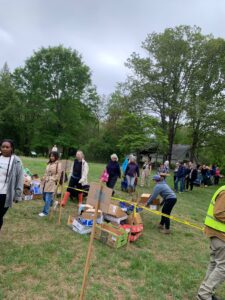
What a GREAT Jefferson Chapter Plant Sale!
This past Sunday, April 26 at Ivy Creek Natural Area in Charlottesville, the Jefferson Chapter hosted our annual fun and successful annual plant sale. A gentle rain the night before and overcast skies meant the plants were perky, and we had a good crowd with excellent plant selection, ample parking…
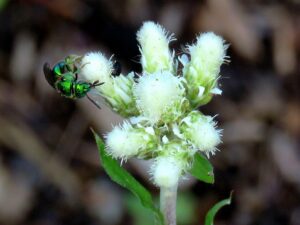
Plant Sale 2025 — Antennaria plantaginifolia
Antennaria plantaginifolia (Plantain-leaved Pussytoes) is a mat forming groundcover, reaching no more than 6″ tall, that can take some foot traffic. It grows on the sides of roads, in poor to average to dry soil in full to partial sun. Blooming from March to the end of April the cream-colored…
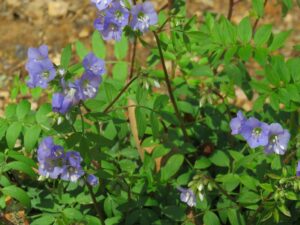
Plant Sale 2025 — Polemonium reptans
Polemonium reptans (Jacob’s Ladder) has lovely leaves that are alternate and divided into leaflets. is a ½ to 1½ feet tall perennial wildflower with loose clusters of blue bell-like flowers that have protruding stamens. This plant is visited by many types of bees (including a specialist bee, Andrena polemonii), butterflies,…
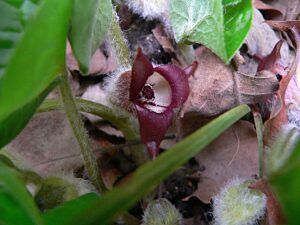
Plant Sale 2025 – Asarum canadense
Asarum canadense (Wild Ginger) is a great groundcover for dappled shade. It likes rich, damp soils and grow from 4 to 12 inches tall with individual leaves reaching three to four inches across. Once established it will spread 6 to 8 inches in all directions yearly, shading out non-native plants.…