


News & Updates
- VNPS New River Chapter monthly meetings will resume in September 2026.
- National Forest Appreciate Day at Pandapas Pond will be held on June 27th.
- The February 2026 newsletter is now available.
- See Upcoming Events for more info about our programs.
- NEW: Our chapter had provided a grant to print copies of a new booklet titled "The Budding Forager's Guide to Edible Plants in SW Virginia". This includes both native plants and invasive plants. Free print copies are available at our chapter meetings, or an online copy may be viewed HERE.
- "A Guide to Gardening with Southwest Virginia Native Plants"is now live and ready to support your planting efforts. Download here. Paper copies are no longer available but hopefully will be reprinted in 2026. If you live outside of SWVA or it's inconvenient for you to pick up, you can purchase online from VNPS to have it shipped directly to you for $10.
- Print copies of the "Plant Invaders of Mid-Atlantic Natural Areas" book is available again at our meetings for a price, and online for free HERE.
- If you would like to volunteer to work in local pollinator gardens or to help to control invasive plants, see our new updated list of opportunities.
- Chapter meetings since 2020 can be viewed on our YouTube Channel. Samples include:
The Flora of Virginia mobile app overview (January 2021), and
Biology and management of invasive aquatic plants in the New River basin (November 2022)

Join
Become a Member:
Support Our Mission.
Donate
Support VNPS with
your donation today.
Upcoming Events
Find Field Trips, Meetings, Programs and Plant Sales.
Find a Chapter
Get involved in your
local VNPS chapter.
By Betsy Washington, Northern Neck Native Plant Society In Fall, many of our native ssters literally light up the landscape with their daisy-like flowers that are vivid lavender violet, blue violet, pale blue or even white. These late season bloomers are critical food sources for migrating Monarchs and other late butterflies, as well as pollinators…Read more
By Betsy Washington, Northern Neck Native Plant Society In late summer the vanilla-scented flowers of Sweet-scented Joe-pye-weed fill the garden and landscape with billowy clouds of long-lasting blooms covered with bees and butterflies. This gorgeous tall perennial can reach 4 – 7’ high topped with large dome-shaped pink to purple inflorescences up to 12 –…Read more
By Betsy Washington, Northern Neck Native Plant Society I am always dazzled by the vibrant, long-lasting blooms of Fall or Garden Phlox as they emerge in July attracting dozens of butterflies, skippers, clearwing moths, hummingbirds and other pollinators to their showy blooms. The large, fragrant pink to red-purple, lavender or rarely white flower clusters (actually…Read more
By Betsy Washington, Northern Neck Native Plant Society Milkweeds are wildly popular in many gardens but most of us grow only two or three species, including Butterflyweed and Swamp Milkweed and possibly Common Milkweed. There are thirteen species of milkweed in Virginia and one of my favorites blooms in late May and June, Redring or…Read more
By Betsy Washington, Northern Neck Native Plant Society The cheerful flowers of our native Common Blue Violet are one of the most anticipated signs of spring, bringing joy to both gardeners and pollinators alike. Blooming from March to June, with occasional rebloom in fall, our Common Blue Violet reaches only 3 – 8” tall with…Read more
By Betsy Washington, Northern Neck Native Plant Society Plantain-leaved Pussytoes is one of our most charming perennial groundcovers and begins blooming this month with fuzzy white, tufted flower heads that resemble the toes or paws of kittens. Other names for this appealing groundcover are Pussytoes, Everlasting, Mouse Ears, Ladies’ Tobacco, and even Dog Toes. Who…Read more
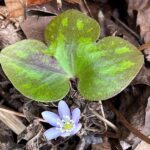
By Betsy Washington, Northern Neck Native Plant Society Chapter One of the earliest signs of spring is the bloom of the Round-lobed Hepatica or Liverleaf, Hepatica americana. The lovely small flowers of this woodland wildflower look fragile but this hardy perennial blooms in the face of winter often as early as February. An array of…Read more
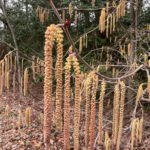
By Betsy Washington, Northern Neck Native Plant Society Our February Plant of the Month, American Hazelnut or Filbert, Corylus americana, is one of our earliest blooming native shrubs, a true harbinger of spring often flaunting its flowers as early as February. As a member of the Birch (Betulaceae) family, American Hazelnut is monoecious, meaning it…Read more